
History and memory
A landscape that remembers. A history that asks more of us than remembrance.
This page discusses enslavement, forced displacement and mass death. It centers evidence, human dignity and the responsibility to teach this history without spectacle.
The Akuapem foothills and their histories
Anansekrom’s mountain setting opens a conversation about the connections between Ghana’s interior, the Akuapem foothills, and the coast. Histories of enslavement unfolded through changing networks of markets, communities, trading paths, and rivers. This history cannot be understood through castles alone: it also lives in plantation sites, old paths, trees, ruins, and the memories of surrounding communities.
Kponkpo, Abokobi, and the Dakobi River
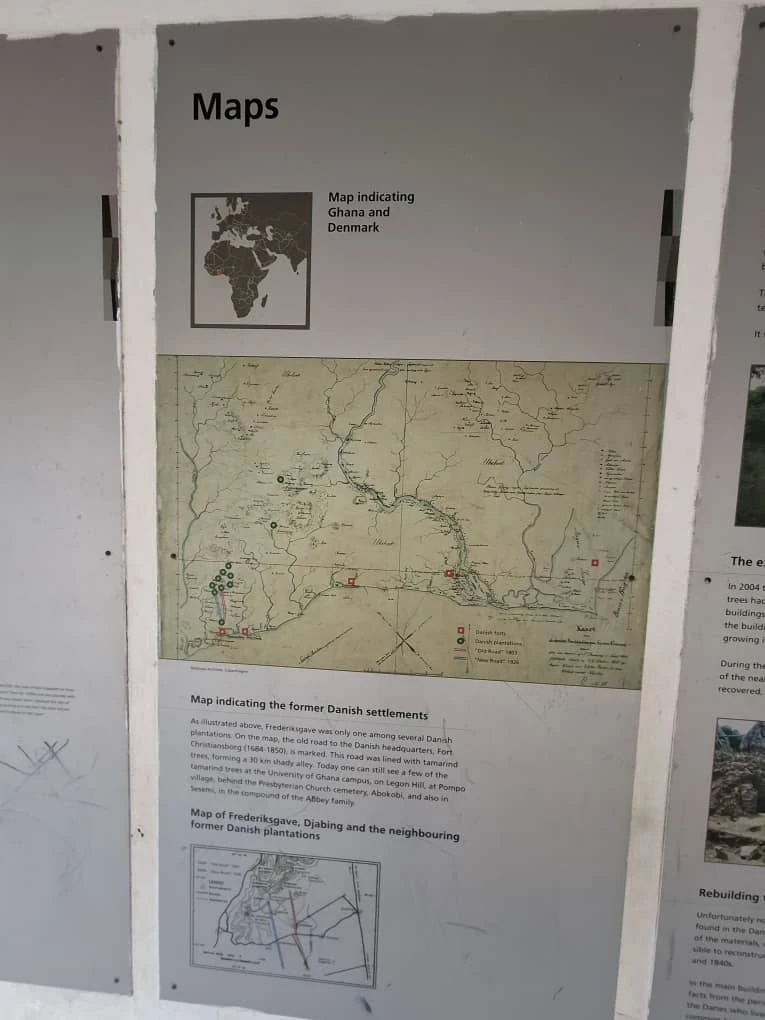
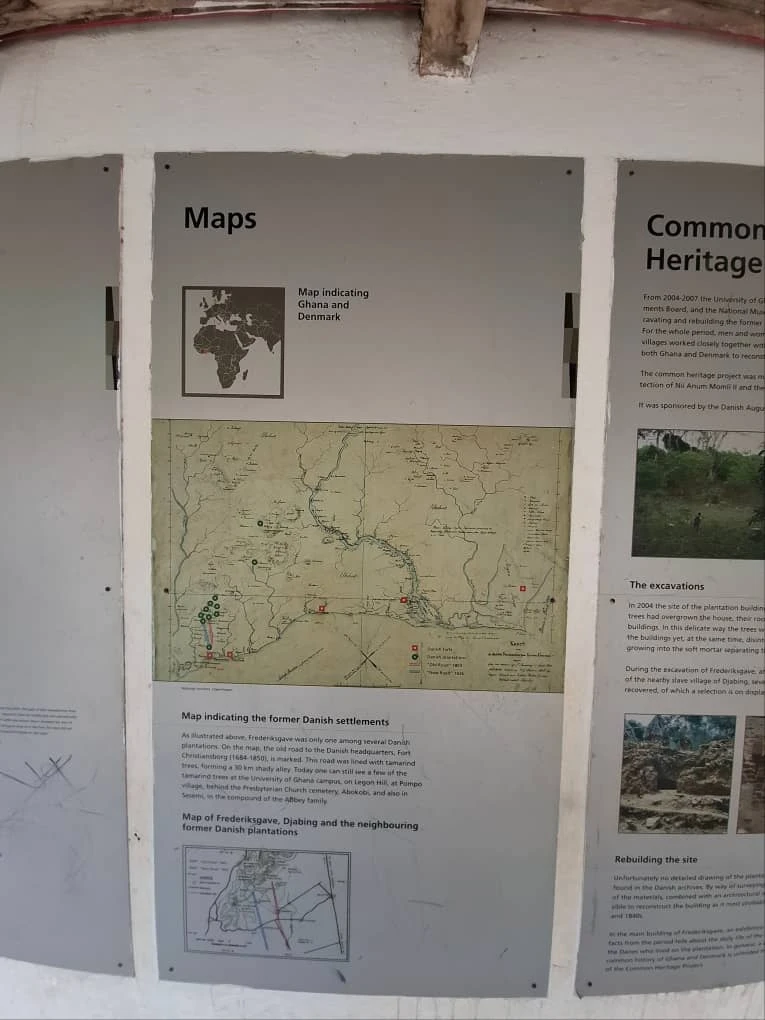
Ga East Municipal Assembly describes a route from the Akuapem foothills through Kponkpo and Abokobi toward Christiansborg Castle at Osu. Its account identifies the Dakobi River as a place where enslaved people were bathed before being taken onward to the coast. The assembly also records surviving tamarind trees, imported from India, along the route and at nearby sites, associated with shade for slaveholders.
Source: Ga East Municipal Assembly, 2025 composite budget, Tourism, printed pages 12–13. This is the municipality’s historical account; it should be read alongside archaeological research and local oral histories.
Sesemi and Frederiksgave
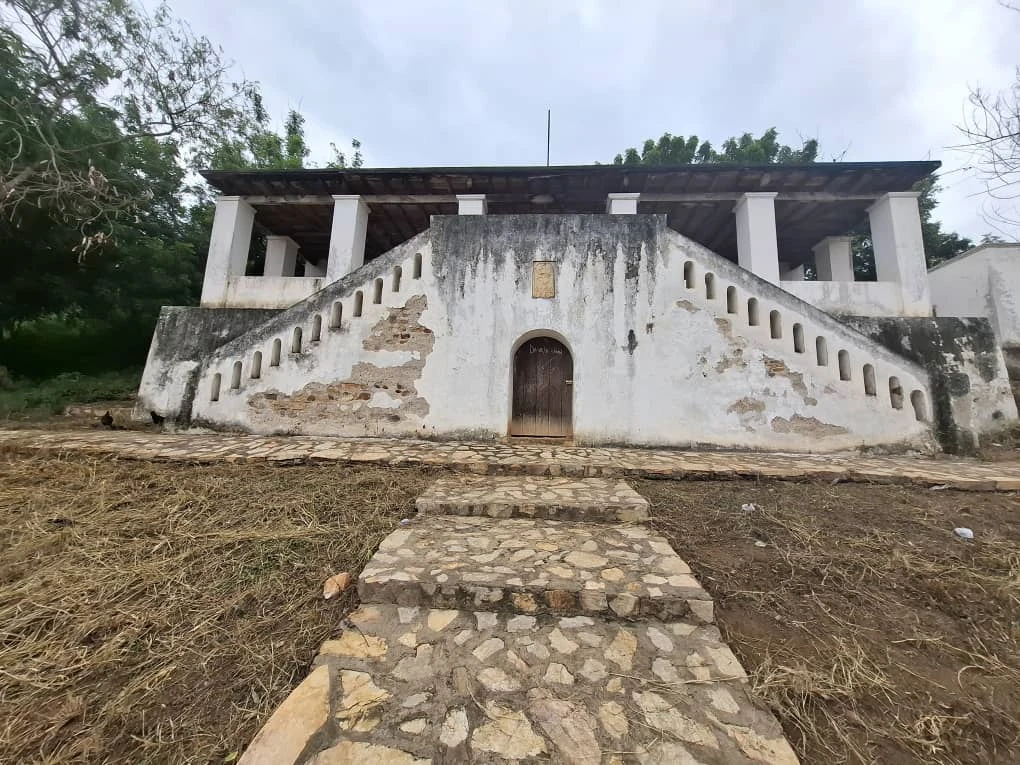
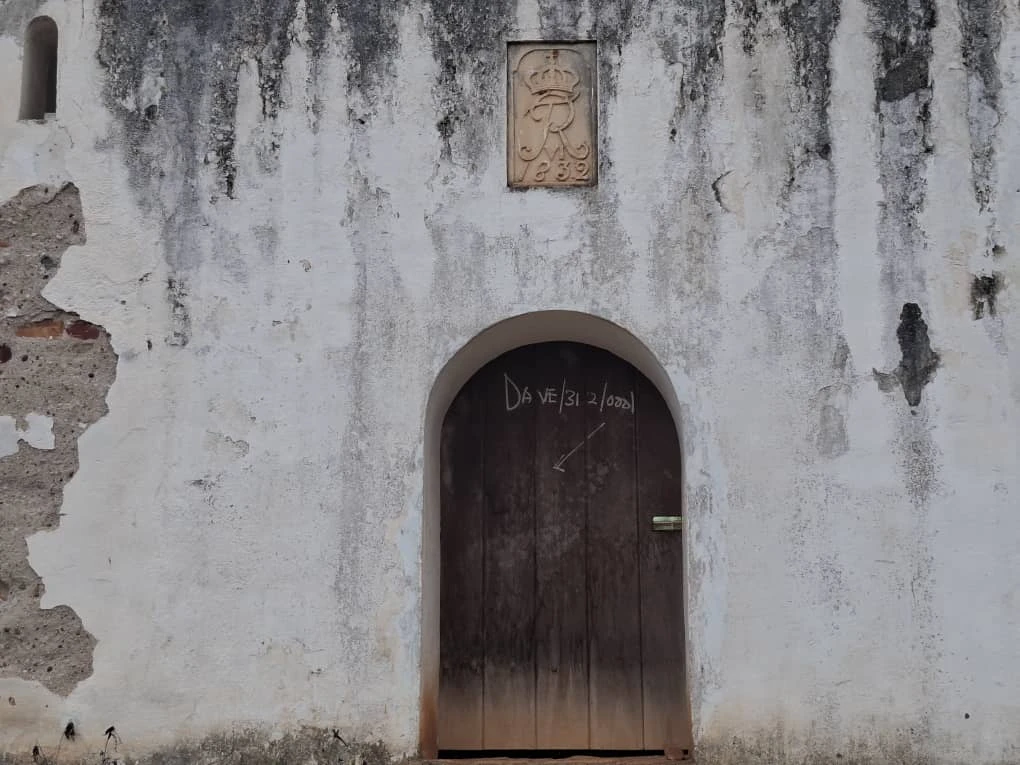
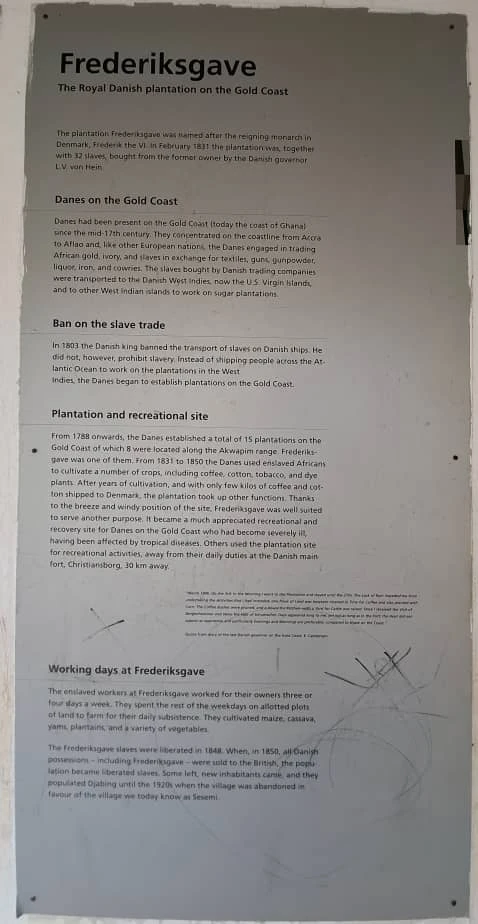
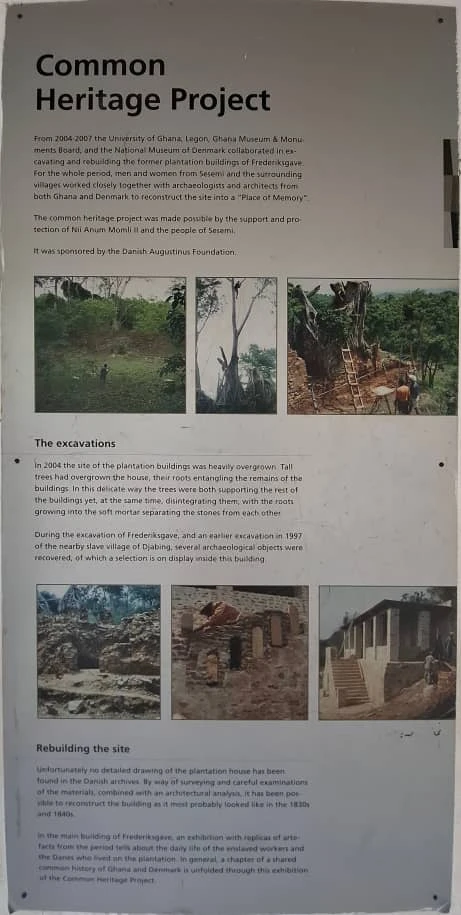
Frederiksgave, near Sesemi, is a Danish plantation site completed in 1832. The National Museum of Denmark documents enslaved labor there and a tamarind-lined connection to Christiansborg. Its history shows how plantation slavery continued after Denmark’s 1803 ban on transatlantic slave trading. The distinction matters: the plantation’s nineteenth-century history should not be folded into a single earlier period.
Source: National Museum of Denmark, History of Frederiksgave. Both sources checked October 4, 2026.
At Anansekrom, we approach these histories with evidence, dignity, and care. We seek to understand the people who lived through them, the communities that endured them, the systems that enabled them, and the landscapes that still carry their traces.
The past is something we inherit, examine, and learn from.
From the site
Frederiksgave in photographs
These photographs show the house, its entrance and the exhibition at Sesemi. Open a photograph to examine the full image and panel text.
Why this history matters
Ghana’s coastal forts hold evidence of encounter, commerce, violence and survival.
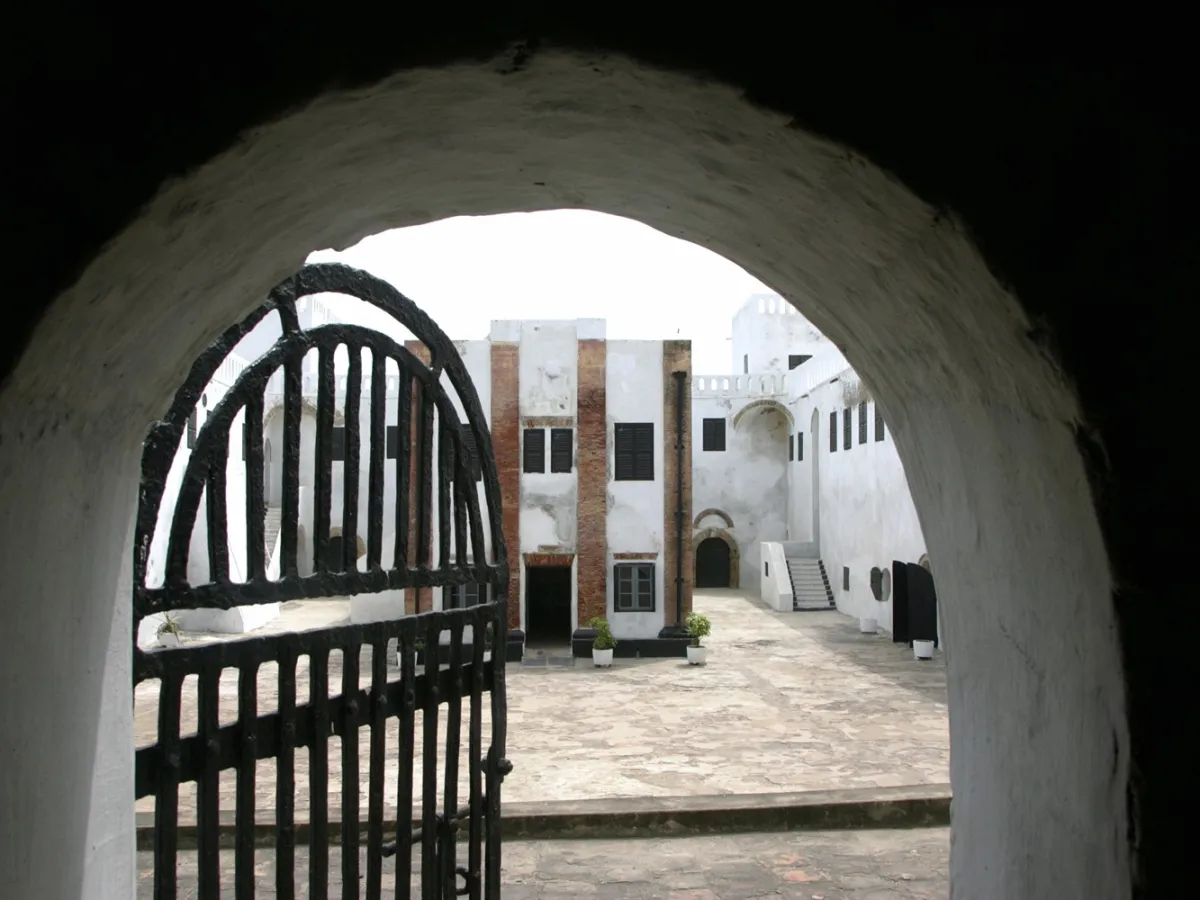
European powers built and contested trading forts along the Gold Coast. Over time, sites including Elmina and Cape Coast became deeply implicated in the imprisonment and forced embarkation of enslaved Africans.
These places cannot speak for every person or every system of enslavement. They can, however, help visitors confront the structures that made the transatlantic trade possible and consider its lasting consequences across Africa and the diaspora.
A concise timeline
1482
Elmina Castle is established
Portuguese traders construct São Jorge da Mina on the Gold Coast. Its role later becomes inseparable from the trafficking of enslaved Africans.
17th–18th centuries
The trade intensifies
European commercial networks and plantation economies drive a vast expansion in forced embarkations from West and West-Central Africa.
1807
British abolition legislation
Britain prohibits its subjects from participating in the transatlantic slave trade, although illegal trafficking and other systems of enslavement continue.
1866
Last documented transatlantic voyages
SlaveVoyages records the final known voyages in a trade whose political, economic and cultural consequences remain present.
Now
Memory, repair and responsibility
Archives, historic sites, families and communities continue the work of preserving evidence, honouring lives and teaching this history with care.
Scale and uncertainty
Numbers can show scale. They cannot contain a life.
| Measure | Estimate |
|---|---|
| Forced aboard | 12.5 million |
| Survived crossing | 10.7 million |
Figures are rounded from the SlaveVoyages estimates as summarised by the US National Endowment for the Humanities. They describe the transatlantic trade, not all systems of enslavement.